

The Yamakasa Portal-Site!


Viewing Guide
Everything from traveling info over maps to answering your questions
The Viewing Manners (2025 Updated Edition)
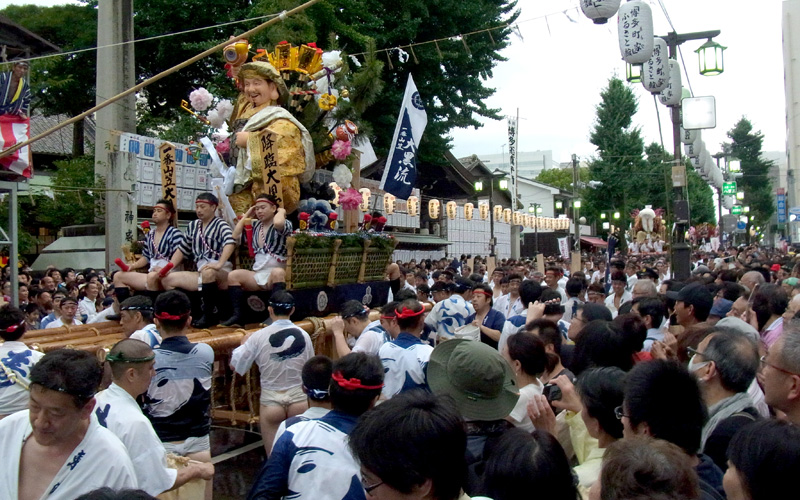
Hakata Gion Yamakasa attracts about one million tourists on the day of Oyayamakasa, but when so many people gather, “sightseeing manners” become a problem. Hakata Gion Yamakasa, a dedication event that has overcome the Corona disaster and aims to be a “safe and secure festival,” has entered an era in which spectators must also be mindful of “safety and security” in response.
Never use a rain or sun umbrella!

In recent years, the Hakata Gion Yamakasa Promotion Association has officially announced the etiquette of “not using umbrellas when watching the festival”. This includes not only rain umbrellas but also parasols. The festival period of Yamakasa coincides with the rainy season, and in recent years there have been many sunny days that bring unusually hot weather, so there are many people watching the festival with rain or parasols. However, if umbrellas are used along the roadside where there are many spectators,
-
The tip of the umbrella hits others.
There is a possibility of coming into contact not only with spectators, but also with the float carryers, carrying Yamakasa running at full speed, and the participants running together.
Participants who come in contact with the umbrellas will be in great danger, and the umbrellas will also affect the people who were holding them and those in the vicinity.
It is very dangerous to use umbrellas when watching the show. Please refrain from using umbrellas to avoid serious accidents. - Umbrellas are larger than a person’s body, so they will certainly extend into the street along the road.
You might think that you could just step back, but you generally don’t, and even if you did, the pressure of the onlookers behind you would prevent you from stepping back.
If the umbrella overhangs the path, there is a possibility of serious injury due to contact between the umbrella and a participant, as described above. - Naturally, the umbrellas get in the way and make it difficult for people behind to watch.
For the most part,The atmosphere becomes very bad, and the situation becomes explosive.(In fact, I’ve seen that happen time and time again.)
Since 2023, announcements have been made repeatedly to refrain from using umbrellas when viewing the area around Kushida Shrine. In addition, the security guards on the roads around the shrine have strongly warned and instructed visitors to fold up their umbrellas. This is even during heavy rain.
In recent years, there have been many incidents of contact between participants and spectators at other sporting events and festivals, and each time this happens, the deterioration of spectator manners is pointed out. We would like to make the Hakata Gion Yamakasa Festival a “safe and secure festival” for both participants and spectators.
When you visit Yamakasa, be sure to wear a hat during the daytime and a raincoat if you visit Yamakasa when rain is predicted.
If you do not agree with this, we ask that you please go to the back of the roadside or watch the live TV broadcast.
Obey the instructions of police officers and Yamakasa traffic officers.
Every year, there are problems when spectators and participants come into contact with each other during the Hakata Gion Yamakasa festival, in which about 1,000 people carrying Yamakasa, which weighs about one ton, run at full speed.
Waves of people pass through the streets like a muddy stream while carrying Yamakasa is passing by, so it is very dangerous to lean out into the street or enter the road to take pictures.
A frequent occurrence in recent years has been contact with smartphones, tablets, and smartphone-mounted selfie sticks that have been inserted into the road to be photographed. The photographer’s attention is always drawn to the viewfinder, and the distance between the device and the participant seems to be lost.
There may be ropes at the site for traffic control, so do not go over the ropes and onto the road.
Also, be sure to follow the instructions of the police officers on guard and the participants who are in charge of organizing the front of the carrying Yamakasa, called “Kotsu (green and white sash)” and “Maesabaki (yellow and white sash)”.
Let’s have “common sense” in securing a place to see the sights.
At popular viewing spots, large crowds gather from early in the day. However, some people start laying out newspapers and stringing them up the night before to secure a space for a large number of people. Moreover, some people are a bit insane in taking up space, such as the person who took the spot never comes back. The Yamakasa course is all on public roads, so please do not take up space in this way.。At the very least, let’s be mindful of waiting in a way that is meaningful—like staying on-site for a long time.
We also often hear of problems that occur every year, such as an argument that broke out when someone who came later got in line in front of someone who was already waiting.
Many problems, large and small, are reported each year over securing a place in this way.Even though it’s a festival, but we don’t want to get into trouble with the police.To avoid any trouble, please refrain from taking a spot in an unreasonable or rude manner. Try asking politely, such as ‘Is this spot available?’ or ‘May I join here?’—and enjoy the festival while building good relationships with others.
Secure a safe viewing location

Yamakasa carrying floats are carried not only on wide streets but also on narrow streets. Of course, it is very dangerous in some places because not only the Yamakasa but also about 1,000 people carrying the Yamakasa rush into the narrow streets.
It is understandable that you would like to see Yamakasa in a powerful place, but there is a possibility that you may come into contact with participants or Yamakasa in narrow alleys, or with participants or KakiYamakasa that bulge out at a curve at a turn.
It is also very dangerous to climb guardrails, benches, power boxes on the street, the roofs of subway stops, and the walls of houses and apartments to watch the spectacle.
Be sure to obediently follow the instructions of the police officers conducting traffic control and the participants conducting traffic control, and watch from a safe place.
The inside of guardrails and the shadows of utility poles are quite safe areas, so be sure to keep yourself safe and enjoy the spectacle.
On July 12th, 13th, and 15th, there will be “major traffic restrictions” in place!
Traffic regulations will be enforced in a wide area, including Hakata Ward and major roads leading to Hakata area, during “Oiyamanarashi” on the 12th, “Shudanyamamise” on the 13th, and “Oiyamakasa” on the 15th, and automobile operations will be greatly restricted.
The Nishitetsu buses, which are the main means of transportation for Fukuoka citizens, are greatly affected by this. The scene of buses lined up in a row, waiting to move, is sometimes referred to as a “Bus train” or “Shudan bus mise”.
Since the “Oiyamanarashi” on the 12th and the “Shudanyamamise” on the 13th take place before evening, getting caught in this traffic jam will greatly affect students who are traveling to work or heading to part-time jobs, so every year social networking sites are filled with angry posts and shouts whenever the event takes place.
In recent years, many popular artists hold live concerts around July 12 and 13 at bayside venues (Marine Messe Fukuoka and Fukuoka International Center), and related organizations often have a hard time disseminating information on traffic congestion caused by Yamakasa.
If you plan to travel through Hakata and Chuo wards on the 12th and 13th, we recommend that you travel early or take the subway.
Check “Public Transportation Information” for information on traffic regulations.
If you are coming by your own car, be aware of parking lot exit restrictions and vehicle closures.
For the same reason, those who come to Yamakasa by car should also be careful. Every year there is a huge traffic jam, so we recommend that you use public transportation if possible.
If you must drive your own car, park your car in a parking lot outside the Yamakasa area before entering the Yamakasa area.
Also, it is surprisingly easy to forget that if you park in a restricted traffic zone, you will not be able to get your car out of the parking lot until the restricted time period is lifted. Be careful not to be unable to get your car out of the parking lot when you have urgent business.
Check “Public Transportation Information” for information on traffic regulations.
Be careful with bicycles and strollers.
Bicycles should also be used with caution during the Yamakasa period. Since there are so many spectators during Yamakasa, there have been many problems with pedestrians coming into contact with cyclists on crowded sidewalks and small children being injured, so please be careful.
In addition, if bicycles are easily parked on the street, it will not only cause inconvenience to nearby residents, but in the worst case, it may interfere with the progress of the Yamakasa festival.
If you are riding a bicycle to see Yamakasa, be sure to park it in the bicycle parking space as early as possible.
It is also very dangerous to use strollers on narrow streets. It is recommended that strollers be used on the wider sidewalks along Taihaku-dori, Showa-dori, or Meiji-dori.
Things to know before attending the event
Viewing Guide
Trivia
Even More Information


